Did you know Questa began as a village of sheep farmers? The first Questa-area settlers traveled to the Rio Colorado country on the Kiowa Trail between 1805 and 1818, driving their sheep with them, and by 1835 families were coming up from Taos to farm and graze sheep here through the summers. When the permanent village of San Antonio del Rio Colorado was founded in 1842, flocks were at the heart of it, and in the mid-1800s a wall built around the plaza offered the fledgling settlement of sheep farmers and traders a stability its people had not enjoyed before.
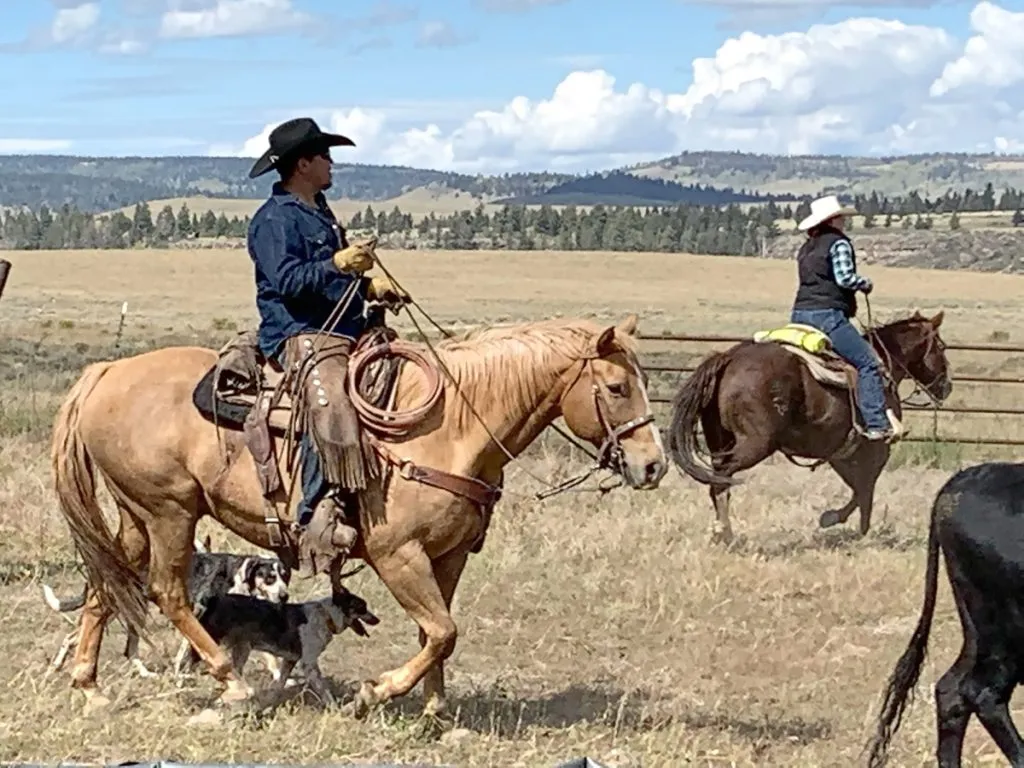
Click to see more photos of cattle ranching near Questa — riders gathering cattle near San Antonio Mountain
Farming that valley floor was never a matter of rain alone. Questa agriculture has always depended on irrigation water drawn from the Red River and Cabresto Creek, carried to small fields where families raised the crops that could thrive in a short, high-country season. Alfalfa, hay and winter wheat became the valley staples, and they are still grown today. Some grain, and even some cattle, are now certified organic to supply a growing market, but the pattern underneath is the old one: water shared carefully, fields worked close to home, and harvests measured against the coming winter.
Sheep held their place here far longer than many visitors expect. As late as the 1940s and 1950s, Questa remained a sheepherding and grazing community with about 5,000 sheep. Wool, lambs and hard local knowledge of grass and weather carried families through the mine's ups and downs and through years when other work was scarce. Sheepherding has since declined for several reasons, chief among them that sheep can carry diseases that affect bighorn sheep, and the U.S. Forest Service has been converting sheep grazing permits to cattle permits. Over time, traditional sheep herds were mostly replaced by cattle herds.
The cattle that replaced them still move with the seasons, in a rhythm any early Questa farmer would recognize. Herds graze the plains north and west of town through the winter and spring, then in early June they are moved west to the other side of the Rio Grande, usually driven by riders on horseback across the ford still known as the Sheep Crossing, a name that preserves the older flocks in the very act of moving cattle. In the fall the herds come back, and the cycle of branding, gathering and winter feeding begins again on the Questa side of the river.
That cycle is still lived family history here. In Questa, Bobby Ortega learned ranching and farming from his grandfather J.P. Rael and other Rael family elders, in country that includes the Otra Banda, the west side of the Rio Grande, and the Columbine area. His family still brands and vaccinates its winter-born calves in the spring, then sends them across the steep Rio Grande crossing to graze permitted allotments through summer and fall, bringing them home to Questa pastures for the winter. It is the same seasonal migration, carried on by the descendants of the families who built the village, proof that ranching in Questa is not a chapter that closed. It is a way of life still being handed down.