Listen first, and look second. On a still mid-November morning near Questa, the rattling call of sandhill cranes often reaches the ground long before the birds themselves come into view, drifting down from a high, slow-moving line crossing the Taos Plateau. The Rio Grande del Norte country sits on the Central Flyway, one of the great migration corridors of North America, and the proclamation that created the national monument in 2013 names sandhill cranes among the birds that depend on this route each fall and spring.
Click to see more photos of sandhill cranes
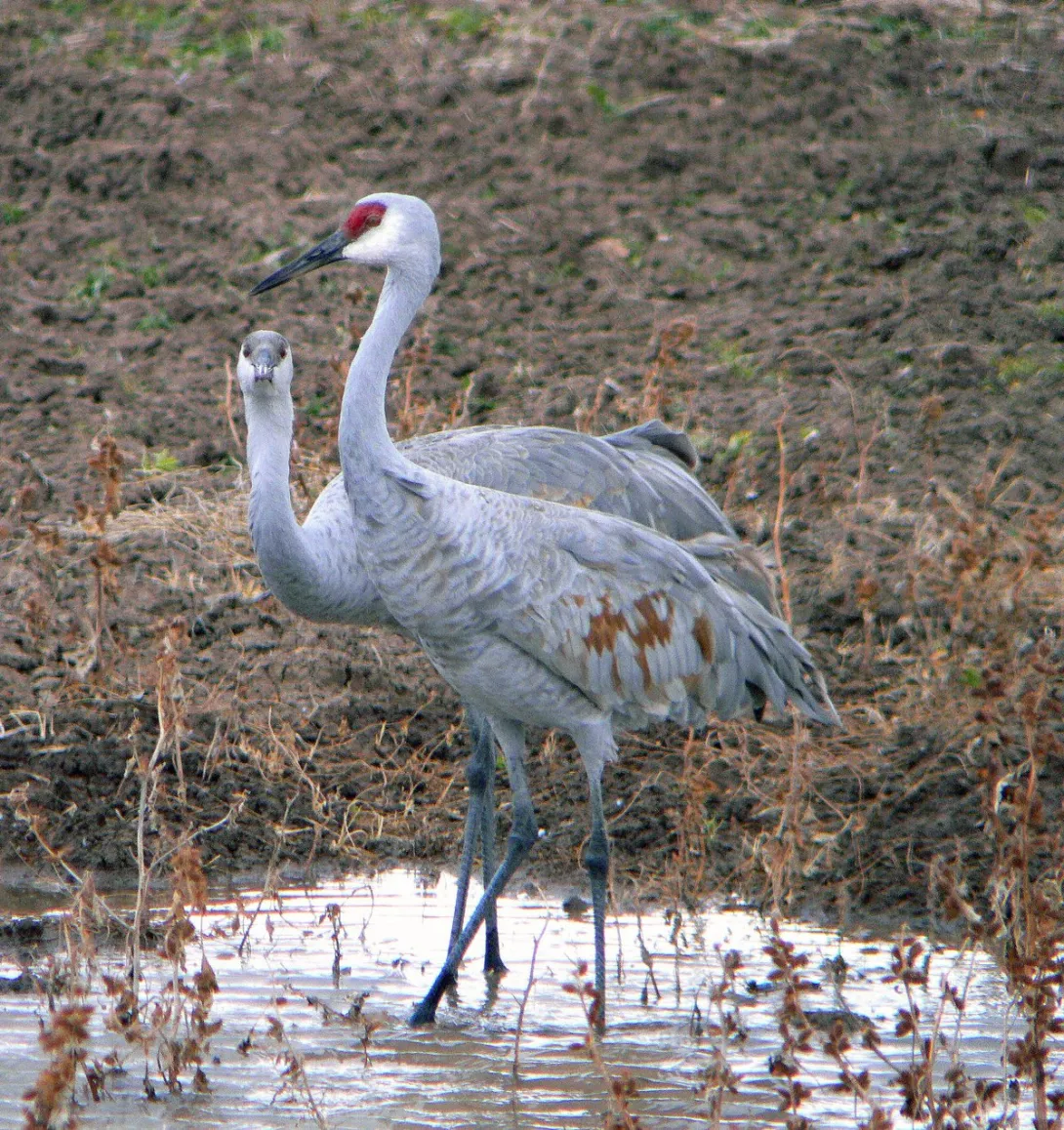
A sandhill crane is hard to mistake once you see one well. Adults stand about three to four feet tall, with a wingspan of more than five feet, slate-gray feathers that can carry a rusty wash, long black legs, and a bare red forehead. In flight they hold their necks and legs straight out, unlike herons, which tuck their necks back. Their rolling, trumpeting call carries for a long distance, and mated pairs are known for calling together in a synchronized duet.
The birds passing over Questa in November are in the middle of a long journey. Cranes that nested across the northern United States and Canada move south through the San Luis Valley of Colorado, where the National Park Service notes that fall birds are present from late September through mid-to-late November, and then follow the Rio Grande into New Mexico. Farther down the river, the United States Fish and Wildlife Service reports that the first cranes usually arrive at the end of October and that numbers are greatest from early November through late January, with birds roosting overnight in shallow water and flying out near dawn to feed in nearby fields. The shallow playa wetlands of the Rio Grande del Norte National Monument serve the same purpose on a smaller scale, and the Bureau of Land Management describes them as critical stopover points for migrating cranes, waterfowl, and shorebirds.
For watchers near Questa, the best approach is patience and a wide view. Scan the sky from the gorge rim and the overlooks of the Wild Rivers Recreation Area, watch the river corridor at first light and again toward evening, and check open fields and wetlands from the roadside where you can stop safely. Ducks and Canada geese move along the same corridor in November, so a morning that begins with crane calls may also bring strings of waterfowl low over the river. Binoculars help a great deal, because the most memorable sight is often a distant flock turning together in the light.
Know before you go
Please watch cranes and other wildlife from a respectful distance, and never feed wild birds, because feeding changes their behavior and can put them at risk. Stay on roads, trails, overlooks, and other established viewing areas, and let resting and feeding flocks stay undisturbed, especially at dawn and dusk when they are moving between roosts and fields. Exact locations of sensitive roosts and nesting areas are intentionally not shared here, so please enjoy these travelers from the public places described above and leave them the space they need to continue their journey.