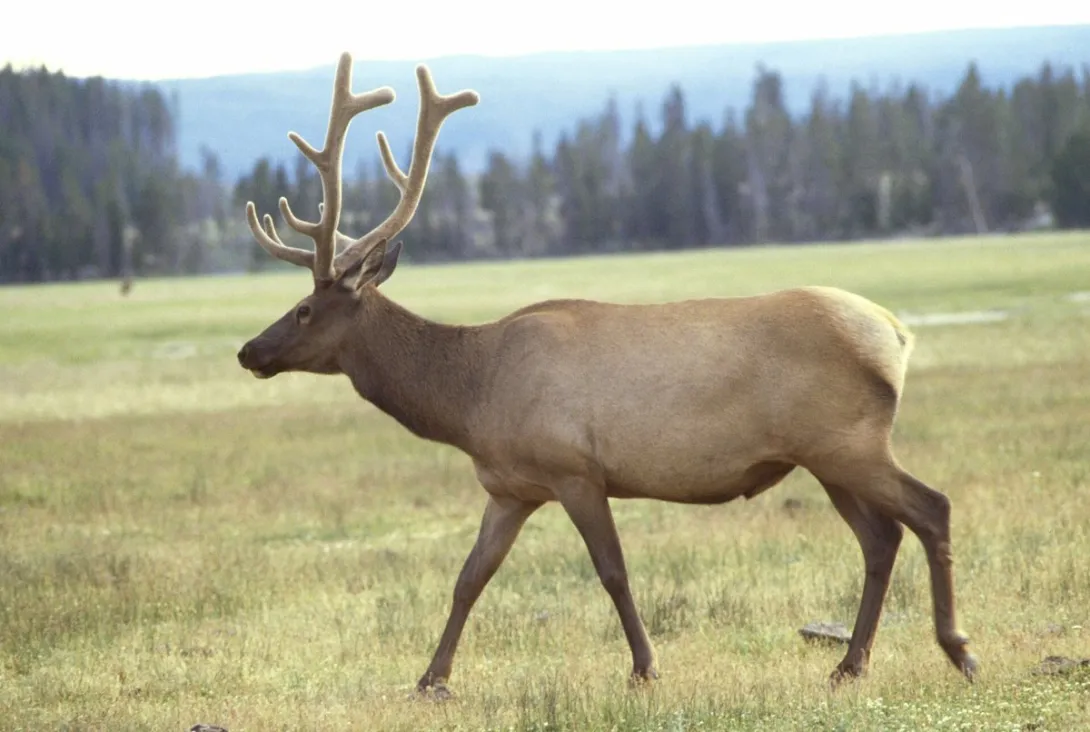
As late November settles over Questa, the wide sagebrush and grassland country west of the village takes on an important winter role. The Taos Plateau, inside the Rio Grande del Norte National Monument, is winter home for large mammals including Rocky Mountain elk and mule deer. When snow deepens in the surrounding high country, that open plateau country, cut by the Rio Grande Gorge and dotted with volcanic cones, offers the forage and room these herds need to get through the cold months.
Elk are the larger of the two, and the monument country is especially important for the San Antonio elk herd. The New Mexico Department of Game and Fish describes the plateau as essential winter habitat and a migration corridor for that herd, as well as for pronghorn and mule deer. Because old netwire sheep fencing once fragmented that movement, the Bureau of Land Management and its partners have converted more than 72 miles of historic fencing to wildlife-friendly specifications or removed it, work intended to expand access to winter habitat, reduce fence-related deaths, and make it easier for elk, deer, and pronghorn to move across the landscape.
Mule deer share much of that same winter country. Smaller than elk and known for their large ears, they use the plateau sagebrush, native grasslands, and pinyon-juniper edges alongside elk through the winter. From the rim country at Wild Rivers and other established recreation areas, visitors sometimes spot distant herds grazing in early morning or late afternoon light, with the gorge and the Sangre de Cristo Mountains framing the view. Sightings are never guaranteed, and that uncertainty is part of honest wildlife watching in a working wild landscape.
Late fall is a good time to look carefully and patiently. Scan open country slowly from roads, trails, overlooks, and established recreation areas, and use binoculars or a spotting scope to enjoy animals without approaching them. Elk and deer that are feeding and moving calmly are undisturbed, while an animal that stops feeding, stares, or moves away because of you is telling you that you are too close. Give herds extra room in winter, when conserving energy matters most, and let the animals choose the distance.
Know before you go: Watch wildlife ethically and from a distance. Keep plenty of space between you and elk and mule deer, use binoculars for a closer view, and never feed wildlife, because human food harms animals and teaches them to approach people. Stay on roads, trails, overlooks, and established recreation areas, and do not follow herds off route. Sensitive exact locations are intentionally not shared in this article, to protect the animals. If your presence changes an animal's behavior, back away slowly and give it more room.