
Saturday, October 31, 2026
There is no better place to spend a crisp fall Saturday near Questa than the rim of the Rio Grande Gorge at the Wild Rivers Recreation Area, in the heart of the Rio Grande del Norte National Monument. This morning starts cloudy and cool in the village, in the low 40s, before skies turn partly cloudy and the afternoon high reaches the mid-50s — fine weather for a slow drive out to the overlooks, a rim walk, and some patient wildlife watching.
The scenery here works on two levels at once. Up top is the wide Taos Plateau, a volcanic plain at an average elevation of about 7,000 feet dotted with volcanic cones, where the monument spreads across rugged, wide-open country. Then the ground simply opens: the Rio Grande has carved a narrow gorge up to 800 feet deep through layers of volcanic basalt flows and ash. At Wild Rivers, the Red River comes down its own canyon to meet it. The Bureau of Land Management notes that the canyon descends 800 feet from rim to river, creating a unique diversity of plant and animal life in that short vertical drop, including ancient pinon and juniper forests with trees 500 years old.
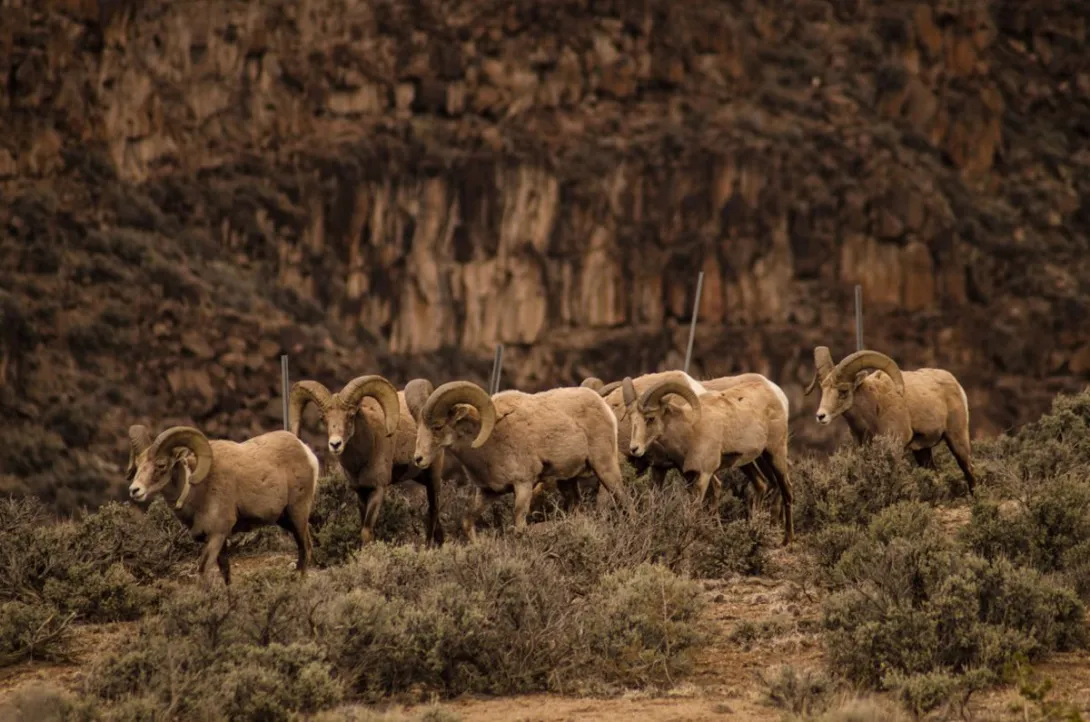
That meeting of plateau, cliff, and river is why the wildlife list is so rich. The BLM lists watchable wildlife at Wild Rivers including mule deer, bighorn sheep, elk, red-tailed hawks, and mountain bluebirds, and the monument is an important wildlife migration corridor and wintering area as well as part of the Central Migratory Flyway for birds. Rocky Mountain bighorn sheep are the gorge's signature sight — a band of rams moving through the sagebrush or picking its way along the cliff bands is worth every minute of scanning with binoculars. Watch quietly from the rim, from established trails, and from roadsides, keep a respectful distance, and never feed wild animals. The animals you may see are wild residents, not exhibits, and they are best enjoyed exactly that way.
One important note before you go: the BLM's closure of the La Junta Trail at Wild Rivers continues until further notice. The agency has completed a feasibility study on stabilizing and realigning the trail and is actively seeking funding for the project. La Junta Point Overlook and Campground remain open, so the classic view down to the confluence of the two rivers is still yours, and visitors can reach the River Trail and the lower parts of the canyon from the Little Arsenic Springs Trail. Dress in layers today — west winds may gust near 20 miles per hour at the rim this afternoon — and carry water even on a cool day.
By late afternoon the light does its best work here, raking across the basalt walls and picking out every ledge and juniper shadow before sunset at 6:06 PM. Whether you spot a ram on the skyline, a red-tailed hawk working the canyon wind, or nothing but the river shining far below, a Saturday at Wild Rivers is the northern Rio Grande valley at its wildest and most welcoming. Come see it — and leave it just as you found it.