Did you know that long before the open pit changed the mountain east of Questa, miners spent nearly four decades following narrow veins of ore deep underground? The Questa molybdenum mine, about six miles east of the village in the Taos Range of the Sangre de Cristo Mountains, was unusual from the start. As geologist John H. Schilling explained in his 1956 study for the New Mexico Bureau of Mines and Mineral Resources, most molybdenum mines worked low-grade, widely scattered ore, while Questa held high-grade molybdenite in fissure veins, the cracks and seams that cut through the rock in Sulphur Gulch, a tributary of the Red River.
That difference shaped everything that followed. The true nature of the veins in Sulphur Gulch was recognized in 1916, after the soft black mineral and earthy yellow material found there had been mistaken for graphite and sulfur. The R&S Molybdenum Company was formed in 1918, and production began in 1919. That same year, the Molybdenum Corporation of America acquired the property and continued the difficult work of developing the mine, following the veinlets down and sideways wherever the ore led.
At first the work stayed close to the surface and close to hand labor. Miners entered the high-grade veins through adits, horizontal tunnels driven into the hillside in Sulphur Gulch. Then, in 1923, a mill and a camp were built along the Red River, and production soared, as the New Mexico Geological Society summarized the era. By that year the mill was already treating about 40 tons of ore a day, a modest figure by later standards but a turning point for a village mine that had begun with hand drilling, mules, and wagons.
Year after year the workings grew. Between 1919 and 1958, miners developed more than 35 miles of underground workings, reaching as far as 1,200 feet below the surface. They chased the veins deeper as the best ore moved downward, until by 1941 the mine extended about 260 meters deep. Schilling recorded that total production to January 1, 1956, had reached 18,095,000 pounds of molybdenite, the mineral from which molybdenum, used to harden steel, is taken. Behind that number stood generations of Questa families whose work, commutes, and daily rhythms were tied to the whistle and the shift change.
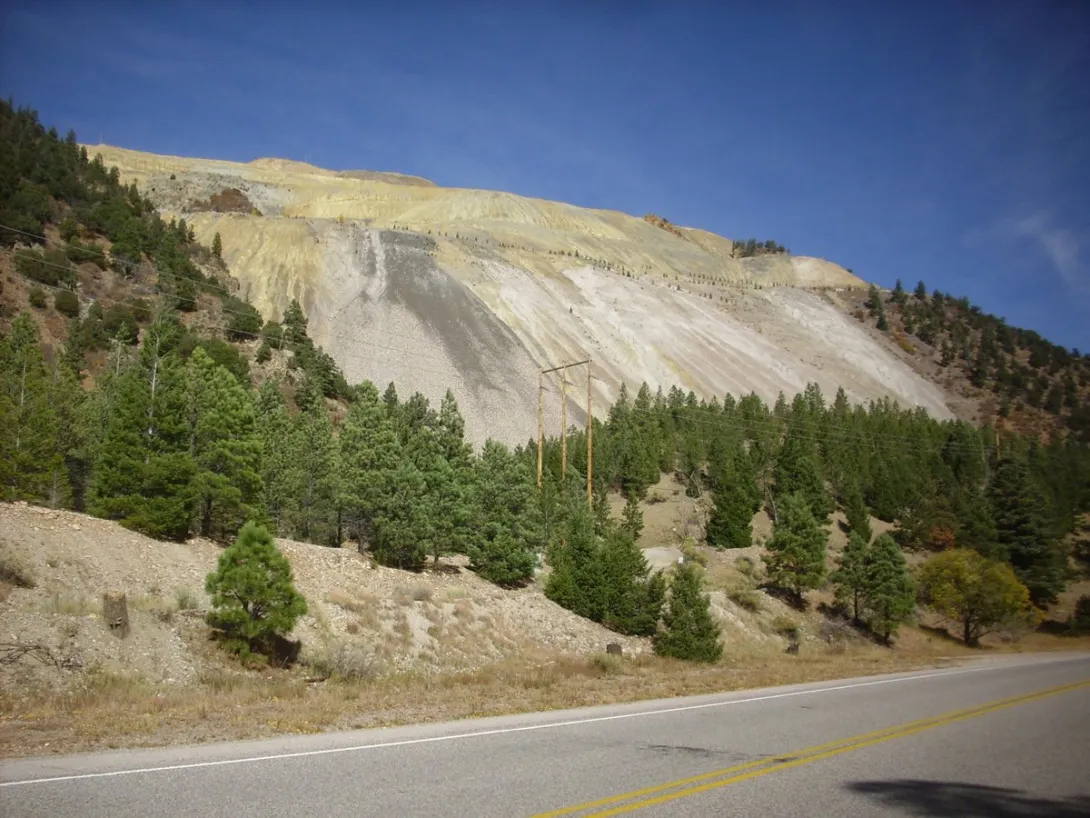
Underground mining of those high-grade veins ended in 1958, when the ore that had sustained the first mine began to run out. Exploration did not stop, and a very different chapter, the open pit years, would follow in the 1960s. But the first mine deserves to be remembered on its own terms, as a hidden landscape beneath the mountain, 35 miles of tunnels dug by hand and machine, and as the work that reshaped Questa from a farming and ranching village into a mining town as well, long before most people passing on the highway could see any sign of it from the road.