Few great industries begin with a case of mistaken identity, but Questa's mining story does. In Sulphur Gulch, the ground held a soft black mineral and a yellow earth, and for a long time nobody knew what they really were. The black mineral was thought to be graphite, and the yellow earth was thought to be sulfur, the very substance that gave the gulch its name.
Far from ignoring the strange materials, locals put them to work. The soft black mineral served as wagon-wheel grease, keeping axles turning on rough roads. It also served as shoe polish, a humble, everyday use that put the gulch's minerals into homes and onto boots across the area. It is a wonderful detail: a substance of future industrial importance, valued locally for keeping wagons rolling and shoes shined.
The truth arrived in 1916. In that year, the minerals were recognized for what they actually were: molybdenite and ferrimolybdite. The soft black substance that had greased wagon wheels was molybdenite, and the yellow earth beside it was ferrimolybdite. With that recognition, a curiosity of Sulphur Gulch became a resource, and the ground locals had known for years took on an entirely new meaning.
Timing transformed the discovery. World War I created strong demand for steel-hardening metals, and molybdenum was exactly that kind of metal. Because of that demand, the claims staked in 1914, two years before anyone understood what the minerals were, suddenly became valuable. Claims that might have sat idle in peacetime were worth working in a world at war.
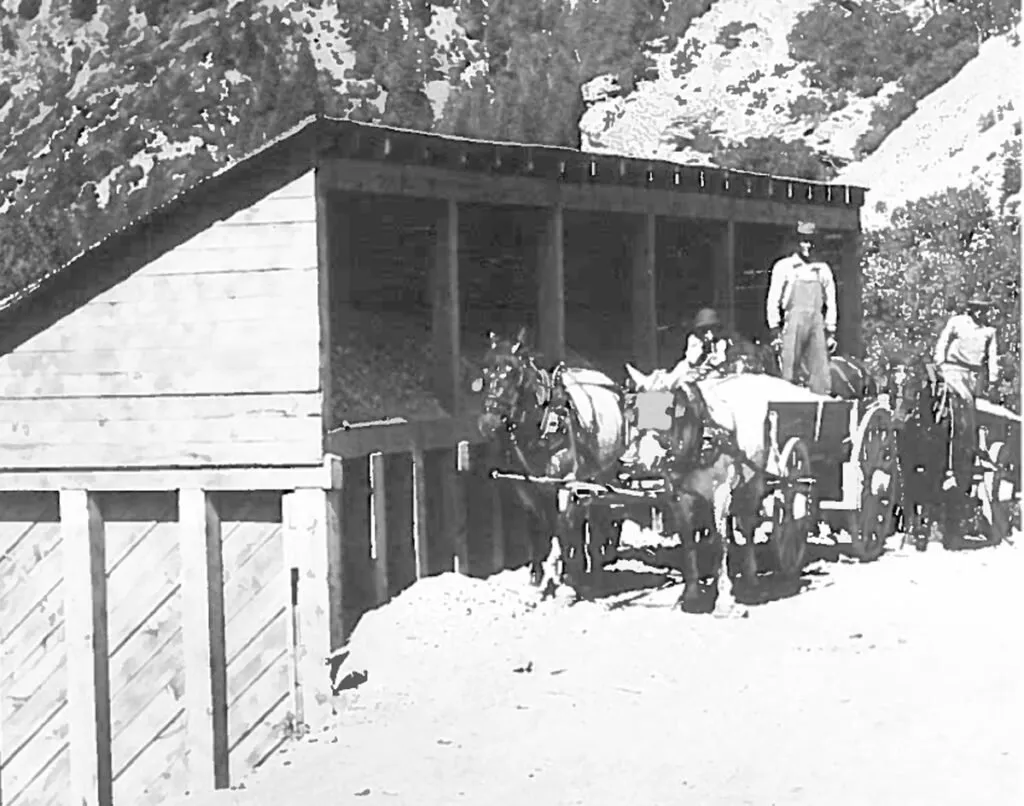
By 1926, the young industry still ran on muscle, both human and animal. Miners hauled ore with mules and horse wagons to the June Bug Mill. Picture those teams picking their way out of the gulch, wagonloads of ore bound for the mill, a decade after the great recognition. It was slow, hard, physical work, a long way from the mechanized mining that would come later.
The Sulphur Gulch story is a reminder that history often hides in plain sight. For years, the makings of Questa's mining era sat underfoot, mislabeled as graphite and sulfur, smeared on wagon wheels and polished into shoes. All it took was one act of recognition in 1916, and a world war's demand, to turn a local curiosity into the foundation of a mining town.