Did you know that for a time, Questa's molybdenum mine did not sleep at all? After the old high-grade underground veins ran out and underground mining ceased in the late 1950s, years of drilling told a new story. By 1964, exploration begun in 1953 had outlined a large tonnage of low-grade ore just west of the underground workings, ore that could be mined from the surface. It was a completely different kind of mine from the one Questa's first miners had known, and it would reshape work, and the mountain, for a generation.
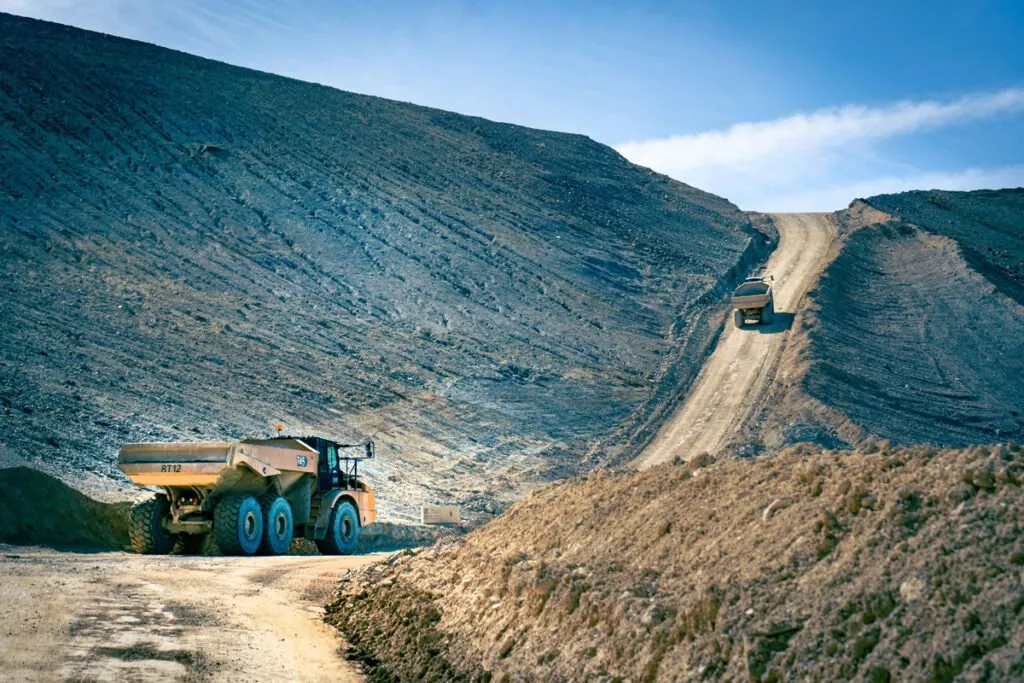
Click to see more photos of the Questa mine area — the mine landscape today and the steep road crews called the Stairway to Heaven »
In 1964 the old mine camp was torn down, a large, modern mill was built on the camp site, and crews began stripping away rock to reach the ore. Open pit mining began in 1965. Instead of following narrow veins deep underground, miners now worked a widening pit in daylight, moving far more rock to recover the molybdenite scattered through it. Molybdenum mattered because it hardens steel, and in those years demand kept the new operation growing.
The scale soon matched the ambition. The mill, first built at 10,000 tons per day, was expanded to 18,000 tons per day. The mine and mill operated 24 hours a day, seven days a week, in three shifts, employing about 500 workers. Then, in 1968, a major landslide of more than 500,000 tons forced the company to redesign the mining plan and refinance the operation. Over the next three years a major new stripping program added three large 17-yard shovels, more blast-hole drills, and a fleet of 120-ton trucks.
For Questa families, the pit years meant steady wages in a village long tied to ranching, farming, and seasonal work, and a new mining-based cash economy that reached local shops and suppliers in Questa and Taos. It was also, as later years would prove, a boom-or-bust living, always tied to the world price of one metal. The work was skilled, round-the-clock, and communal, with neighbors on the same crews and the same shifts, year after year.
Even at its height, the pit was not the final chapter. In 1975, exploratory drilling found a large, deeper orebody beneath and beyond the pit, one that could only be mined from underground. Phasing out the open pit began in 1978, and in 1983 a new underground mine opened using gravity block caving, with ore hauled up a 7,000-foot decline to the mill. The open pit years had lasted less than two decades, but they left Questa with a larger mill, a changed landscape east of the village, and a generation of miners whose stories still anchor how the village remembers the moly era. The mine itself is history today, closed in 2014, and this chapter is told here as heritage, not as a place to visit.