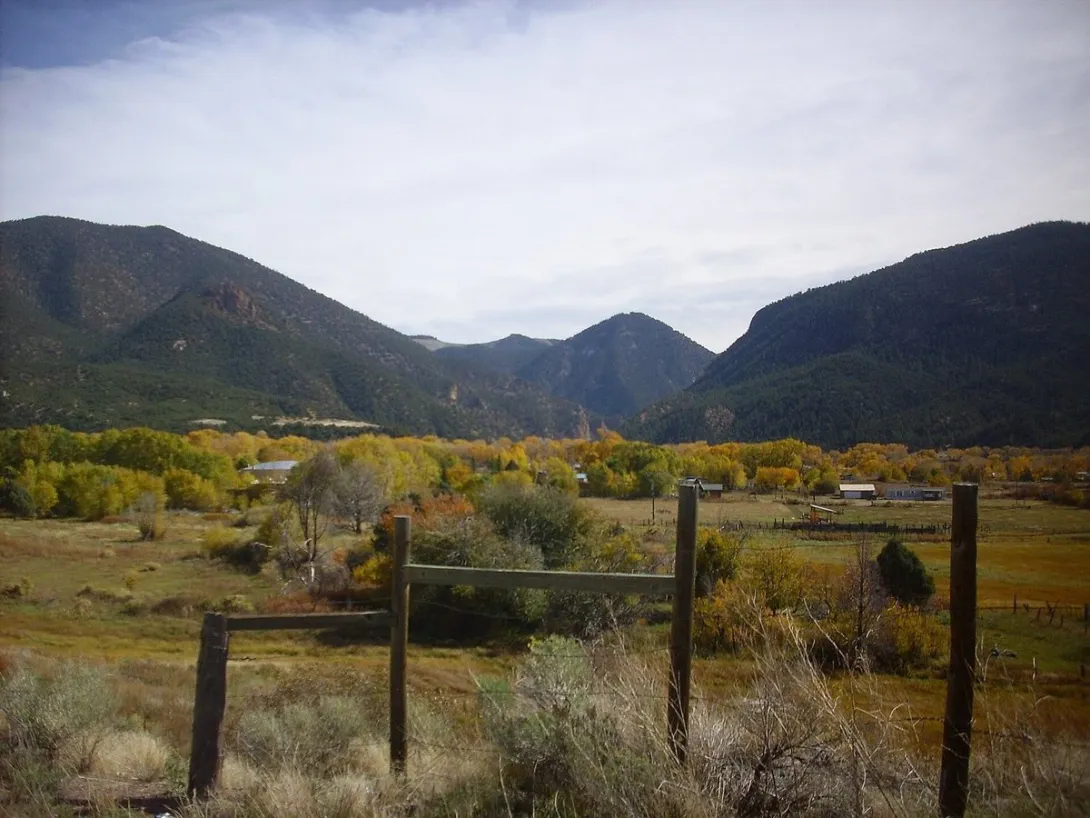
One of Questa's oldest stories lies quietly beneath its VFW Cemetery. There, on a hilltop at the mouth of Red River Canyon, above the Red River and Cabresto Creek, sits El Pueblito, an ancestral village whose heaviest years of life ran from 1150 to 1225, some eight centuries ago.
The people who lived there are linked to the ancestors of Taos Pueblo. In Taos creation stories, they are remembered as the Shell people, a name that carries their identity out of archaeology and into living tradition. For the Pueblo, this is not an abandoned ruin belonging to strangers; it is a place bound up with where their own people come from.
Daily life at El Pueblito was built by hand. Residents lived in pit houses and jacal rooms, ground their corn on metates, and made pottery from local clays dug nearby. They farmed the land around them and hunted with bow and arrow, a complete working village fitted to the resources of the canyon mouth and the valley below.
The site's position was no accident. El Pueblito stood on the Kiowa Trail, one of the old travel routes through this country, and its location made the village a trading and travel center. Goods, news, and people moving along the trail would have passed this hilltop, connecting its farmers and potters to a much wider world.
That combination, farming village and trail crossroads, helps explain why the settlement thrived through the late 1100s and into the early 1200s. The hilltop offered a view over the meeting of canyon and creek, fields below, and the route that brought visitors and trade to the doorstep.
Then, by the mid-1200s, the people left. El Pueblito's busiest era closed, and the village settled into the long quiet that has covered it ever since, its rooms and plazas resting beneath the cemetery ground where Questa now honors its own veterans, two very different chapters of remembrance sharing one hill.
Sources such as the Questa Creative Council, the Questa History Trail's Sign 3, and the Questa Timeline keep El Pueblito in the village's public memory. It reminds everyone who passes that Questa's history did not begin with its founding families or its mine. Long before either, the Shell people built a thriving home at the mouth of the canyon, and in the stories of Taos Pueblo, they are remembered still.