
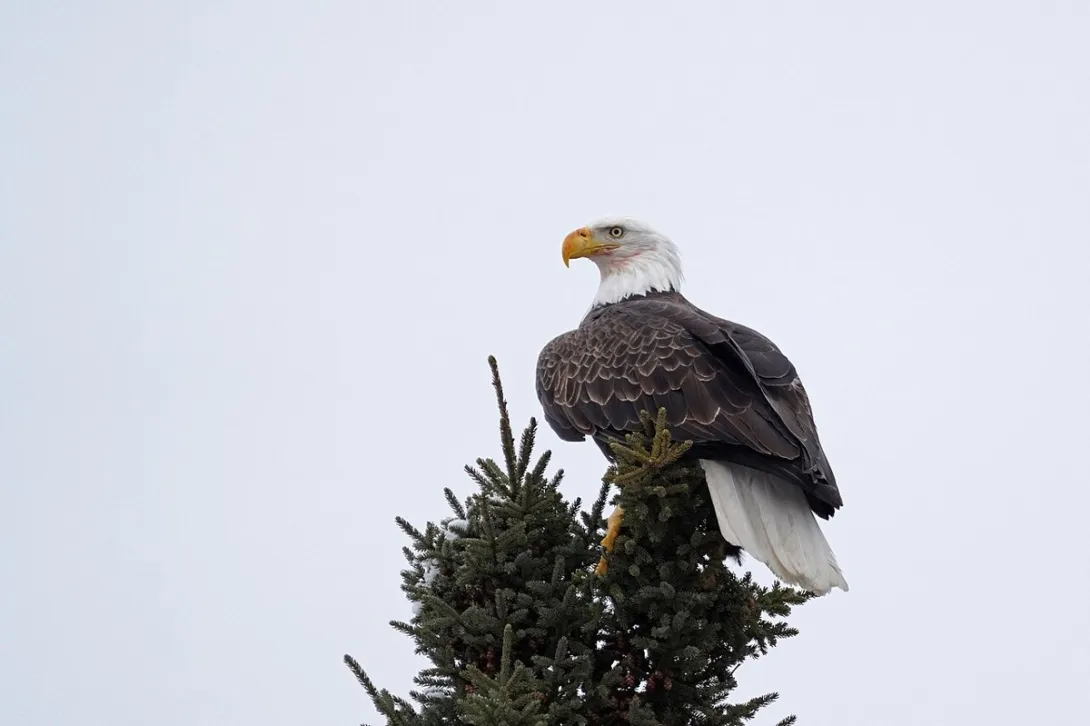
Early November is when a patient look upward starts to pay off north of Questa. The Rio Grande Gorge, protected within the Rio Grande del Norte National Monument, is home to two very different eagles. Golden eagles live here all year, riding the thermals that rise off the basalt walls. Bald eagles are the winter guests: the monument's founding proclamation notes that bald eagles roost above the river in winter, then fly out over the sagebrush of the Taos Plateau. As northern waters freeze, more of them follow the river south into our stretch of the gorge.
The golden eagle is the gorge's resident hunter. The proclamation singles out the gorge as important nesting habitat for golden eagles and numerous other raptors, and in New Mexico golden eagles breed mostly in steep-walled mountain canyons, with cliffs the most common nesting site. From a rim overlook, look for a very large, dark brown bird with a wash of gold on the back of its head and neck, soaring flat-winged over the plateau edge, where it hunts small mammals in the open country. Golden eagles here are wild and wide-ranging, and a sighting is always earned with patience.
The bald eagle belongs to the river. Adults are unmistakable, with a white head and tail, dark brown body, and heavy yellow bill, while younger birds are mostly dark and take several years to gain the full white markings. Wintering bald eagles perch in tall trees above the Rio Grande, watch for fish and waterfowl, and share a corridor the proclamation describes as part of the Central Migratory Flyway, a migration route also used by Canada geese, herons, and sandhill cranes. Watch the big snags and cottonwoods along the water at first light, when the birds are settling in to hunt.
Good places to try are the overlooks and rim trails of the Wild Rivers Recreation Area north of Questa, including La Junta Point, high above the confluence of the Rio Grande and the Red River. Bring binoculars, dress for cold rim wind, and give yourself time: scan cliff faces and shaded ledges slowly, then watch the sky where ravens and raptors catch rising air. Early morning and late afternoon are rewarding, and midday thermals can carry eagles high over the plateau. No sighting is ever guaranteed, which is exactly what makes a slow, silent eagle over the gorge feel like a gift.
Know before you go: Watch eagles from a respectful distance, and let binoculars do the approaching. The Bureau of Land Management asks visitors to give wildlife plenty of space, fifty yards or more, and never to feed wildlife. Stay on roads, trails, and established overlooks, and if a bird flushes or changes its behavior because of you, you are too close, so back away quietly. Exact nesting locations for gorge raptors are intentionally not shared here, because nesting eagles are sensitive to disturbance. If you stop along a road to watch, pull fully off the pavement, and enjoy the birds on their own terms.