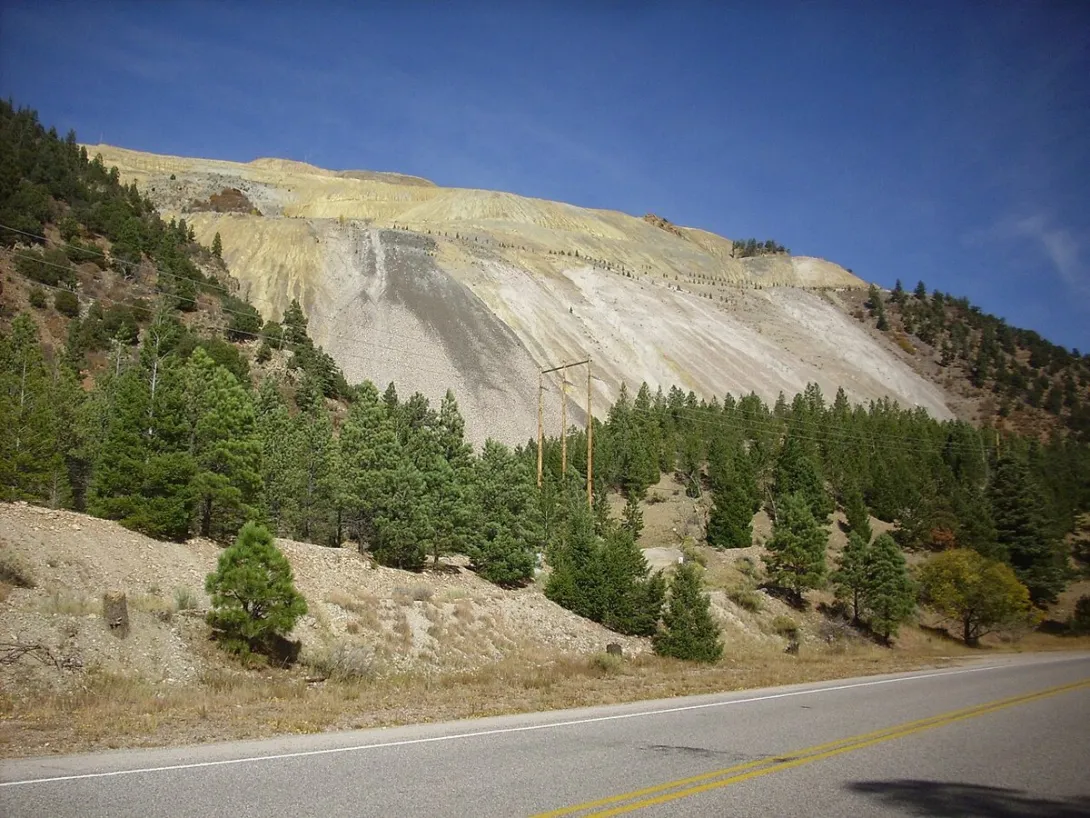
Did you know that Questa changed almost overnight in 1923, when a mill and a mining camp rose along the Red River about six miles east of the village? Until then, the molybdenum workings in Sulphur Gulch, a tributary of the Red River, were a small and difficult enterprise. After the mill and camp were built, production soared, according to the New Mexico Geological Society, and a farming village that had lived by its fields and acequias found itself tied to a mine that would shape its working life for generations.
The story had begun quietly a few years earlier. The Questa History Trail records that the first molybdenum claims in the area were staked in 1914 and covered about 200 acres, and geologists recognized the true nature of the veins in Sulphur Gulch in 1916. Local people had long noticed a soft black mineral and an earthy yellow material there, and some had used the mineral as a primitive form of shoe polish. The black mineral proved to be molybdenite, the ore of molybdenum, and the yellow material was ferrimolybdite. Demand was growing, because molybdenum hardens steel, and during World War I it could stand in for tungsten in many alloy steels when tungsten supplies were limited.
Work in those early years was slow and physical. The History Trail account describes ore that was hand drilled and hauled by mules, even as the workings grew. Underground, miners followed the high grade veins down and across, and any pockets of ore they met were stoped out and hand sorted before the molybdenite was concentrated by flotation. The mine was unusual for its time, because its early ore came from high grade fissure veins rather than from the low grade, widely scattered deposits worked at most other molybdenum mines. Even with mules and hand labor, the operation eventually produced about 50 tons of ore a day.
The camp changed the scale of everything. Additional property was bought until the mine had grown from its first 200 acres to about 14,300 acres. Families who had once measured the year by planting, ditch cleaning, and harvest now also measured it by shifts at the mine and mill. At one time the mine employed 750 workers and was the largest private employer in Taos County, and its owners helped fund village improvements that included a local park and streetlights. For many Questa families, mine wages stood beside farm income, and some households lived in both worlds at once, working underground during the week and tending fields and livestock at home.
That inheritance has always been a complex one, and Questa tells it honestly. The same mine that brought steady work also polluted the Red River and the local watershed, and the History Trail notes the health risks that came both from the dangers of daily mining work and from exposure to mine related pollution in water, air, and land. The mill camp of 1923 is gone, and the mine itself closed permanently in 2014, but the camp years remain a turning point in village memory: the moment when Questa, a community founded on shared water and shared work, learned to live with an industry that would bring both opportunity and a long cleanup, and would test the resilience the village had shown since 1842.