Did you know Questa's founding families chose high ground on purpose? When San Antonio del Rio Colorado was legally established in 1842, its builders put the village on the Cabresto mesa rather than down along the river. That choice shaped everything that followed, from the plaza and the church to the steep road that would one day give the village its modern name.
Earlier attempts to settle this valley had not held. A first land grant in 1815 gave 50 settlers permission to establish a settlement at Rio Colorado, and Spanish authorities maintained a short-lived military post there in about the same year. By 1822 the settlement was abandoned in the face of raids. Families returned by 1829, and by 1835 families were coming up from Taos to farm and graze sheep in the summers, but a lasting village still needed legal standing and a defensible home.
In January 1842 that standing arrived. Thirty-five families petitioned for the San Antonio del Rio Colorado land grant, and possession was granted that month by Juan Antonio Martinez. Through the 1840s the new village rose on the mesa, above the older log cabins along Cabresto Creek where it joins the Red River. Construction of the San Antonio church began in that founding year, the first baptism records from Rio Colorado date to 1842, and the settlement became a community of sheep farmers and traders at the meeting of mountain and river country.
Danger did not end with the founding. In 1845 soldiers were sent to Rio Colorado after Cheyenne raiders killed shepherds and stole sheep, and in 1846, during the Mexican-American War, troops came again to protect the area against raiding. When the war ended, the Treaty of Guadalupe Hidalgo in 1848 upheld the Spanish and Mexican land grants. By 1849 about 100 families were living in the Rio Colorado area, receiving mountain men and traders who came over the old Taos Trail, proof that the mesa village was growing rather than fading away.
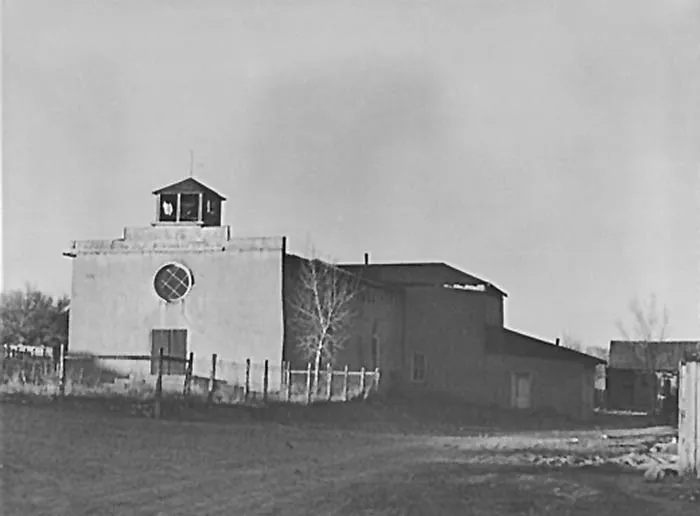
In the mid-1800s the families added a wall around the town plaza area, where the historic church still stands today. Visit Questa's history notes that the wall offered protection to the fledgling settlement and allowed a stability the original population had never experienced. The surnames of those early years tell their own story of a mixed frontier village: Rael, Cisneros, Ortiz, Armenta, LaForet, Kronig, Cruz, Beubien, Vigil, Trujillo, and Gallegos, families of Spanish, French, German, and other origins, many of whose descendants still live in and lead the village today.
The legal ground proved less steady than the mesa itself. After New Mexico became a United States territory, the Rio Colorado land grants were disputed from 1851 onward, and in 1860 Questa-area land grants were not recognized by the United States court. Yet the village endured through war, raids, and disputed titles. When a United States post office was established in 1883 and the name meant to be Cuesta, for a slope or grade, was recorded as Questa, the new name itself pointed back to that founding decision: a village built on the rise, made to hold.